
Land has always been one of the most secure and rewarding asset classes for investors. Unlike stocks or other volatile investments, land is tangible, finite, and steadily appreciates over time. However, when it comes to land investment, one common question investors face is:
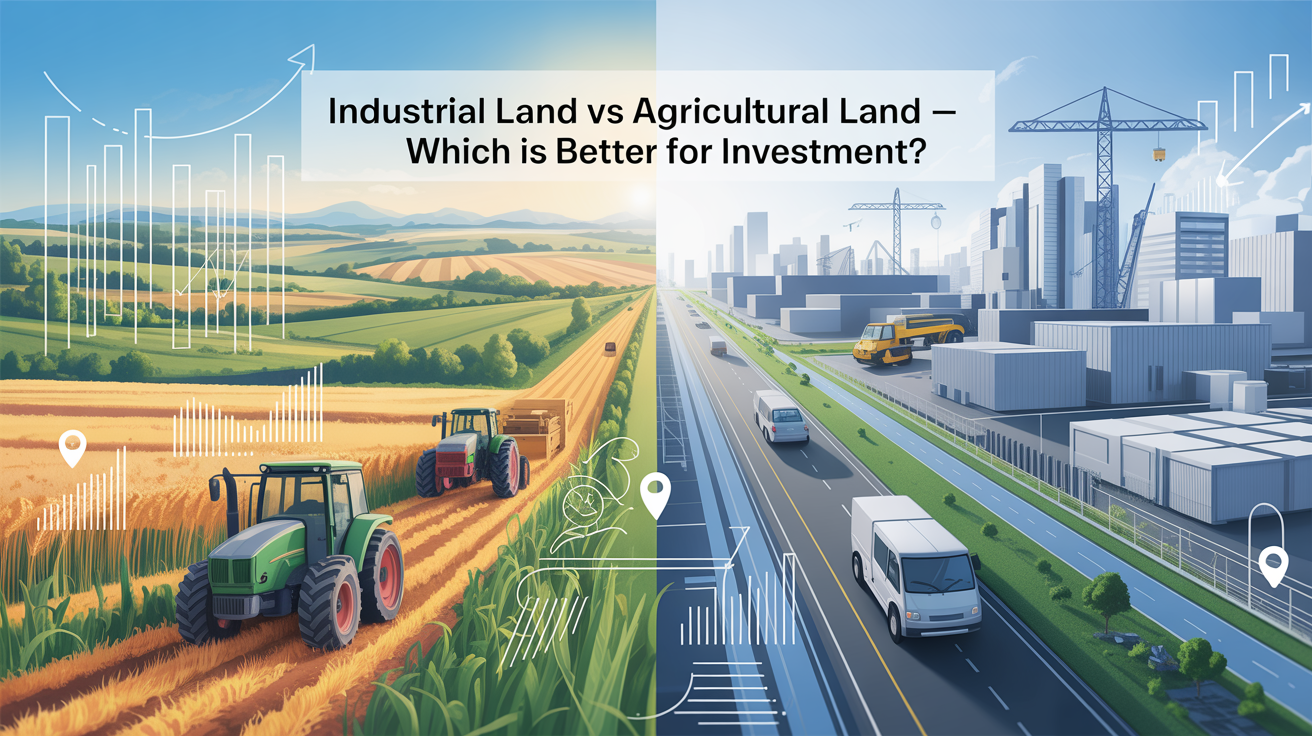
Should you invest in Industrial Land or Agricultural Land?
Both options offer unique advantages and challenges. The right choice depends on factors such as budget, risk appetite, investment horizon, regulatory environment, and future development potential. In this blog, we provide an in-depth comparison of industrial land vs agricultural land, helping investors, developers, and businesses make an informed decision.
Understanding Agricultural Land Investment
What Is Agricultural Land?
Agricultural land is designated primarily for farming, cultivation, horticulture, and allied agricultural activities. It is governed by strict land use regulations to protect food security and rural livelihoods.
Key Characteristics of Agricultural Land
Typically located in rural or semi-rural areas
Lower purchase cost compared to industrial land
Subject to zoning and land-use restrictions
Conversion required for non-agricultural use
Often inherited or fragmented ownership
Advantages of Investing in Agricultural Land
- Lower Entry Cost
Agricultural land is usually more affordable, making it attractive for first-time investors or those with limited capital. - Stable Long-Term Appreciation
As urban expansion and industrialization increase, agricultural land near cities can appreciate significantly over time. - Tax Benefits
In many regions, income from agriculture enjoys tax exemptions, making it appealing for certain investors. - Low Holding Costs
Property taxes and maintenance costs are generally minimal compared to industrial or commercial properties.
Challenges of Agricultural Land Investment
- Legal & Ownership Complexity
Agricultural land often has multiple owners, inheritance disputes, or unclear titles, increasing legal risk. - Land Conversion Issues
Using agricultural land for industrial or commercial purposes requires government approval, which can be time-consuming and uncertain. - Limited Immediate Returns
Unless leased for farming, agricultural land typically does not generate high short-term income. - Regulatory Restrictions
In many states, only farmers or residents are allowed to purchase agricultural land.
Understanding Industrial Land Investment
What Is Industrial Land?
Industrial land is designated for manufacturing, warehousing, logistics, power plants, infrastructure projects, and industrial parks. It is often located near highways, ports, railways, or industrial corridors.
Key Characteristics of Industrial Land
Approved for industrial and commercial use
Located in growth zones or industrial hubs
Higher acquisition cost
Strong demand from corporates and investors
Faster monetization potential
Advantages of Investing in Industrial Land
- High ROI Potential
Industrial land typically appreciates faster due to rising demand from manufacturing, logistics, and infrastructure sectors. - Immediate Commercial Use
No land conversion is required, saving time and reducing regulatory uncertainty. - Strong Rental & Leasing Income
Industrial land can generate steady income through long-term leases to factories, warehouses, or logistics companies. - Government Policy Support
Initiatives like industrial corridors, SEZs, Make in India, and infrastructure development boost demand for industrial land. - Scalability for Businesses
Ideal for businesses planning expansion, factories, or large-scale operations.
Challenges of Industrial Land Investment
- Higher Capital Requirement
Industrial land demands a larger upfront investment compared to agricultural land. - Compliance & Approvals
Environmental clearances, pollution control approvals, and zoning compliance are mandatory. - Market Sensitivity
Demand may fluctuate based on economic cycles and industrial growth. - Infrastructure Dependency
Value depends heavily on connectivity, utilities, and government infrastructure support.
Industrial Land vs Agricultural Land: Head-to-Head Comparison
| Factor | Agricultural Land | Industrial Land |
|---|---|---|
| Initial Cost | Low to Moderate | High |
| ROI | Moderate (Long-term) | High |
| Legal Complexity | High | Moderate |
| Conversion Required | Yes | No |
| Rental Income | Low | High |
| Government Restrictions | High | Moderate |
| Liquidity | Low | High |
| Risk Level | Medium | Medium-High |
| Best For | Long-term holding | Business & growth investment |
Which Land Is Better for Investment?
Choose Agricultural Land If:
You have a long-term investment horizon
You are willing to wait for appreciation
You want low initial investment
You are comfortable with land conversion risks
The land is located near expanding urban or industrial zones
Choose Industrial Land If:
You want higher returns and faster monetization
You are a business owner or corporate investor
You prefer legally clear, usage-approved land
You seek steady rental income
You want to benefit from industrial growth and infrastructure development.
Role of Professional Land Consultants
Land investment especially industrial land requires extensive due diligence, regulatory compliance, and negotiation. This is where professional land acquisition and consulting firms play a crucial role.
How Handsland Solutions Adds Value
Handsland Solutions specializes in end-to-end land acquisition and industrial land solutions, helping investors and corporates:
Identify strategically located land parcels
Conduct legal due diligence and title verification
Manage land aggregation and negotiations
Handle government approvals
Ensure compliance with zoning and environmental norms
With deep local expertise and a transparent approach, Handsland Solutions minimizes risk and maximizes investment value.
Future Outlook: Industrial vs Agricultural Land
India’s rapid industrialization, infrastructure development, and logistics expansion are driving unprecedented demand for industrial land. While agricultural land will continue to hold value,industrial land is emerging as a high-growth investment asset for the next decade.
Key growth drivers include:
Industrial corridors and smart cities
Manufacturing and warehousing demand
E-commerce and logistics expansion
Government-led infrastructure projects
Conclusion
Both industrial land and agricultural land offer investment opportunities but they serve different objectives.
Agricultural land is ideal for patient investors seeking long-term appreciation with lower capital outlay.
Industrial land is best suited for investors and businesses aiming for higher returns, faster growth, and operational use.
The right choice depends on your investment goals, budget, and risk appetite. Partnering with an experienced land solutions provider like Handsland Solutions ensures informed decisions, legal security, and long-term success.

Ready to Start Your Project?
Let’s bring your vision to life. Connect with us to discuss your goals, explore land opportunities, and discover how we can support your project with expert guidance and transparent solutions.
Contact Info
Become a Partner
Let’s build something great together. Share your details below and our team will reach out shortly.